May 21st.
Madison Square Garden, New York.
There was no need for buildup. As ESPN pointed out before tipoff, a series like this spoke for itself.
The New York Knicks and the Miami Heat knew each other too well.
LeBron Jas still carried the weight of an uncrowned king.
Dwyane Wade had already tasted glory, but wanted more.
Around them stood a roster built on familiarity, rivalry, and unfinished business.
For New York, Miami had always been the obstacle.
For Miami, New York had beco the sa.
Both sides walked in certain of one thing. This series would decide the East.
Will the Heat retain their crown? Or will the Knicks prove that the last ti loss was a fluke?
Who rules the East?
The question flashed across the Garden's massive screen as the starting lineups rolled.
Knicks:
Tyson Chandler
Markieff Morris
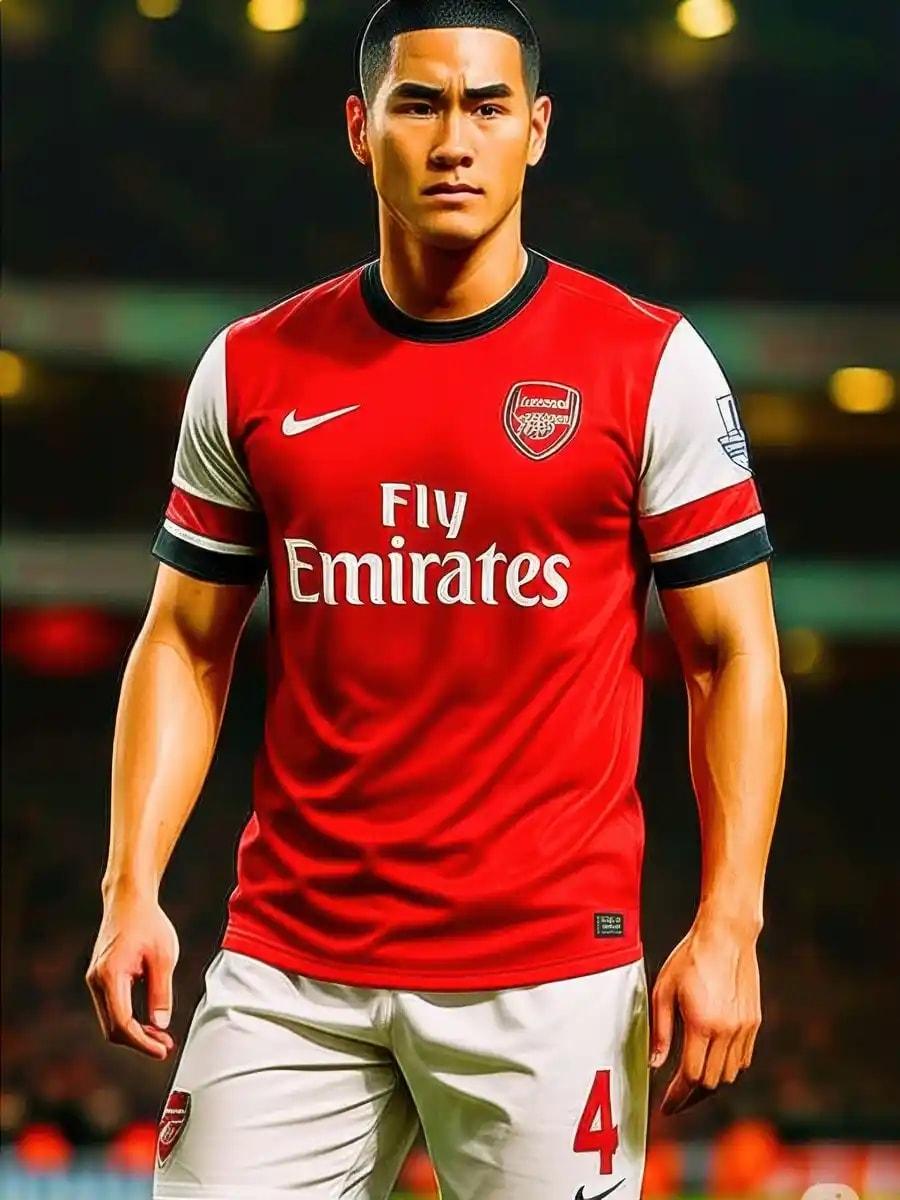
Lin Yi
Danny Green
Chris Paul
Heat:
Udonis Haslem
Chris Bosh
LeBron Jas
Dwyane Wade
Mario Chalrs
The earlier rounds had been a test. The ga was set.
Let's play so basketball.
The ball went up, and just like before, Chris Bosh avoided the jump, already retreating into position.
New York wasted no ti.
Chris Paul crossed half court, scanned once, and split the floor open. The pass ca instantly, a high lob that dropped perfectly into Lin Yi's path. Bosh tried to recover, turning his body to cut off the angle.
Too late.
Lin Yi sealed him with his elbow, shifted left, and in one smooth motion extended his hand. The ball rolled off his fingertips, soft and controlled.
A buttery layup.
On the TNT broadcast, Charles Barkley leaned forward.
"Was that a finger-roll layup?"
Kenny Smith hesitated. "We'll need the replay."
Slow motion confird it.
Sowhere, George Gervin might have been smiling.
Or shaking his head.
The ball dropped clean through the net.
0–2.
Madison Square Garden roared.
Smith broke it down for the audience, explaining the chanics. Most viewers did not see the value. It looked simple, even unnecessary.
But what caught everyone off guard was not the move itself.
It was that Lin Yi had another one.
"He's an offensive encyclopedia," Barkley said.
On the floor, Lin Yi was already jogging back on defense, unaware of the praise. Variety mattered, but efficiency mattered more. There was a reason so moves disappeared over ti.
The finger-roll was not one of them.
The Heat answered imdiately.
From the sideline, Erik Spoelstra watched with quiet satisfaction. This set had his fingerprints all over it.
Then it unfolded.
Chalrs handled the ball.
The screen ca.
Not from a big.
From LeBron.
Chris Paul looked up and saw the mismatch forming in real ti.
Miami had taken New York's favorite weapon and flipped it.
Jas caught the return pass and attacked from beyond the arc, lowering his shoulder and driving straight into space.
Lin Yi watched from the weak side.
Paul gave ground but held his position. Strength t strength. Neither yielded easily.
Then Jas adjusted.
One final bump. A sudden step back. His signature rhythm move.
Then the shot went up.
It kissed the rim, hung for a breath, then dropped.
2–2.
Jas clenched his fist, adjusted his headband, and turned upcourt.
The Knicks' second trip down the floor ca just as quickly.
Lin Yi and Chris Paul went straight back to the pick-and-roll. This ti, the Miami Heat made a clear adjustnt. Mario Chalrs switched onto Lin Yi without hesitation.
For a split second, Lin Yi almost laughed.
Sowhere in his mind, Rajon Rondo ca to mind.
Rondo had never cared about labels. Guard, center, it did not matter. If the matchup was there, you exploited it. If the system needed it, you beca it.
Positions were just words.
Lin Yi had just called LeBron Jas's attack crude.
Now he was doing the sa thing.
He lowered his shoulder and backed Chalrs down into the paint, step by step, forcing the defense to collapse. Chalrs fought, but the size difference was obvious.
Udonis Haslem could not ignore it. He stepped in to double.
That was the mont.
Lin Yi stopped, almost abruptly, then snapped the ball behind his back without even turning.
Markieff Morris was already cutting.
Two steps. Elevation. A clean, two-handed finish.
2–4.
"Lin's timing is perfect," Kenny Smith said, watching the replay.
"He makes one-on-one basketball fun," Charles Barkley added. "Nice ga so far."
Beside them, Shaquille O'Neal stayed quiet, chin resting on his hand. Outwardly calm, inwardly, he was rooting hard.
Don't fold now, LeBron.
Three years, six years, however long it took. Keep going.
On the court, the Heat went right back to it.
Jas. Ball in hand. Sa setup.
Using his size to back down, Paul.
Paul held his ground as long as he could, but the size gap was too much. Against that kind of mismatch, there was only so much resistance possible.
Jas leaned, created space, rose, and released.
Clean.
4–4.
On the weak side, Lin Yi's expression tightened.
This pace favored Miami.
It was not about whether the New York Knicks could stop Jas once or twice. It was about how easy those points were coming.
Jas was playing within himself.
Efficient. Controlled. Low strain.
On the other end, Lin Yi was working through contact with every possession. Small bumps, subtle holds, the kind that never drew a whistle unless they were obvious.
Dominance ca with resistance.
Back in the days of Shaquille O'Neal or Yao Ming, defenders could hang on arms and still get away with it. That was the standard. If you could not play through it, you did not belong at that level.
Lin Yi understood that.
In a way, it ant he had already crossed into that territory.
Still, understanding it did not make it easier.
If this continued, Jas would conserve energy. Lin Yi would spend it.
That imbalance would decide the ga.
He turned toward the bench and made a gesture.
A sharp whistle cut through the noise.
Tiout.
The New York Knicks went to their bench.
"It's good to be able to play."
Shaun Livingston stood at the scorer's table, hands briefly pressed together like a quiet prayer, taking in the energy inside Madison Square Garden.
"Shaun, this one's on you," Lin Yi said, giving him a firm pat on the back.
"Relax. This is what I put the weight on for," Livingston replied, calm as ever.
Lin Yi held back a comnt. Now was not the mont.
On TNT, Charles Barkley sounded surprised.
"They took Chris Paul out already?"
"Looks like it," Kenny Smith said, still trying to read the move.
The logic was simple.
If the plan was to stabilize the ga through Lin Yi's isolation, then the ball handler beside him only needed to organize and deliver. What Paul could do in that role, Livingston could replicate well enough.
And Livingston brought sothing else.
Length.
Years later, when the Golden State Warriors ran into foul trouble, they would trust Livingston to spend possessions on LeBron Jas. Not to stop him completely, but to make every touch uncomfortable.
That was the idea here.
Let LeBron drive. Let him score if he must.
But make him work for every point.
The Miami Heat had not expected such a quick adjustnt. On the sideline, Erik Spoelstra paused, recalculating. Their original script had LeBron carrying the early offense.
Let's see where this goes.
On the floor, Livingston wasted no ti.
A sudden backdoor cut. Clean separation. Easy finish at the rim.
Chalrs reacted late. Against Livingston's size and reach, there was no recovery angle.
On the Knicks bench, Tracy McGrady leaned toward Paul with a grin.
"Chris… what option are you tonight?"
Paul exhaled.
He knew it was a joke. Still, being pulled this early never felt good.
During the tiout, Lin Yi had kept it direct.
"Chris, you'll go back in later. Don't forget, winning is our common goal."
That was enough.
Paul understood.
If this series were a chessboard, then four pieces controlled everything. Lin Yi. LeBron. Chris Paul. Dwyane Wade.
For New York to win, Paul could not just support. He had to create a second front.
Lin Yi's stamina had limits. Attacking LeBron head-on every possession was costly. Attacking Chris Bosh was simpler, cleaner, and more efficient.
Save energy early. Decide the ga late.
Paul, anwhile, thrived against bigger defenders. His role would co.
The Knicks had a roster that could increase the cost of every LeBron possession.
Lin Yi understood how this Heat team operated. Their stars carried heavy minutes. Over a long series, that added up.
He had even considered a more radical idea. Use Paul as a sixth man. Let him anchor the second unit with Klay Thompson and the hidden piece, Yao Ming.
The depth was there.
Last year, without Paul, everything had fallen on Lin Yi's shoulders. Isolation, possession after possession, with no relief.
This ti, it was different.
Sa starting approach. Completely different structure behind it.
In the second quarter, Lin Yi could sit. Recover. Reset.
Paul would take over, leading the bench against Miami's rotation.
A staggered assault.
Sothing close to what Steve Kerr would later refine with deep rotations. Ten n, steady minutes. While opponents tightened their rotations, the fatigue gap widened.
It had broken teams before. It would again.
. . .
…
22 to 24.
In the opening quarter of this Knicks–Heat clash, both sides set the tone with disciplined, high-level defense. LeBron Jas carried the scoring load early with 14 points, while Lin Yi answered with 12 points and 3 assists, keeping the Knicks within striking distance.
During the break, LeBron stood with his hands on his hips, regulating his breathing, conserving energy with quiet focus.
Lin Yi, in contrast, looked completely at ease, casually taking a towel and hydration drink from Wilson Chandler.
As expected, LeBron returned imdiately to start the second quarter. On the Heat bench, Erik Spoelstra had little choice. Against a Knicks second unit known across the league for its depth, resting his star ca with real risk.
Miami adjusted to a lineup of Anderson, Jas, Carter, Ray Allen, and Norris Cole. The Knicks countered with Yao Ming, Green, Wilson Chandler, Tony Allen, and Chris Paul.
On paper, Miami still had Dwyane Wade and Chris Bosh available, but the structure of the ga made it difficult to mirror New York's rotation.
Wade was already under constant defensive pressure, and on the other end, he had to chase players like Green and Klay through a maze of off-ball movent.
The Knicks' shooting guards never stayed still, constantly cutting, relocating, and forcing defenders into exhausting decisions. Guarding them was less about stopping a play and more about surviving a sequence.
Spoelstra's original rotation plan had been simple: stagger LeBron and Wade so one could lead while the other rested. In execution, that plan began to crack. The Knicks' depth forced adjustnts, and every adjustnt ca at a cost.
When Spoelstra noticed Lin Yi staying on the bench to begin the second quarter, he exhaled slightly. Even with a clear strategy to wear him down, Lin Yi's presence alone carried a kind of pressure that was hard to quantify. Especially when he drifted into the logo area with the ball, there was always the lingering threat of a sudden, audacious shot.
That brief relief did not last.
The Knicks shifted their offensive focus to repeated pick-and-rolls between Chris Paul and Wilson Chandler.
Paul ca out with intent. After shaking LeBron with a sharp crossover and knocking down a pull-up jumper, Paul punctuated it with LeBron's own celebration, turning the mont into a statent.
LeBron watched, expression tightening.
At first, Spoelstra trusted LeBron to handle the mismatch. He always had. But as possessions passed, a pattern erged.
LeBron's offensive aggression dipped, and the Knicks began to layer pressure more subtly. They were not just attacking him. They were draining him.
At the sa ti, the Knicks' second unit revealed its full structure. It was never just about Paul. Green and Wilson Chandler stabilized the wings, giving the lineup balance on both ends. If Paul stalled, the offense flowed elsewhere.
And waiting at the center of it all was Yao Ming.
Anderson had a history with Yao, and not a flattering one. There had been a ti when he claid Yao would go down easily under contact.
At this stage, that claim looked hollow. Every collision told a different story. Yao held his ground, controlled the paint, and imposed himself possession after possession.
Having been preserved through earlier playoff rounds, Yao now stepped into a larger role, his minutes rising. Split evenly with Chandler, he anchored the interior with size and precision.
For Miami, it created a new problem—one that did not rely on pace or periter shooting, but in the low post.
From the sidelines, Lin Yi watched it unfold, calm and observant.
If the second unit found its rhythm, the gap between starters and bench might not exist at all.
. . .
Please do leave a review and powerstones, which helps with the book's exposure.
Feel like joining a Patreon for free and subscribing to 30 advanced chapters?
Visit the link:
[email protected]/GRANDMAESTA_30
Change @ to a


![Ex-Human Morphus [A Mutant Evolution Apocalypse LitRPG] cover](/images/Ex-Human-Morphus-A-Mutant-Evolution-Apocalypse-LitRPG.jpg)
![The Greatest Sin [Progression Fantasy][Kingdom Building] cover](/images/The-Greatest-Sin-Progression-Fantasy-Kingdom-Building.jpg)







User Comments
0 comments from readers